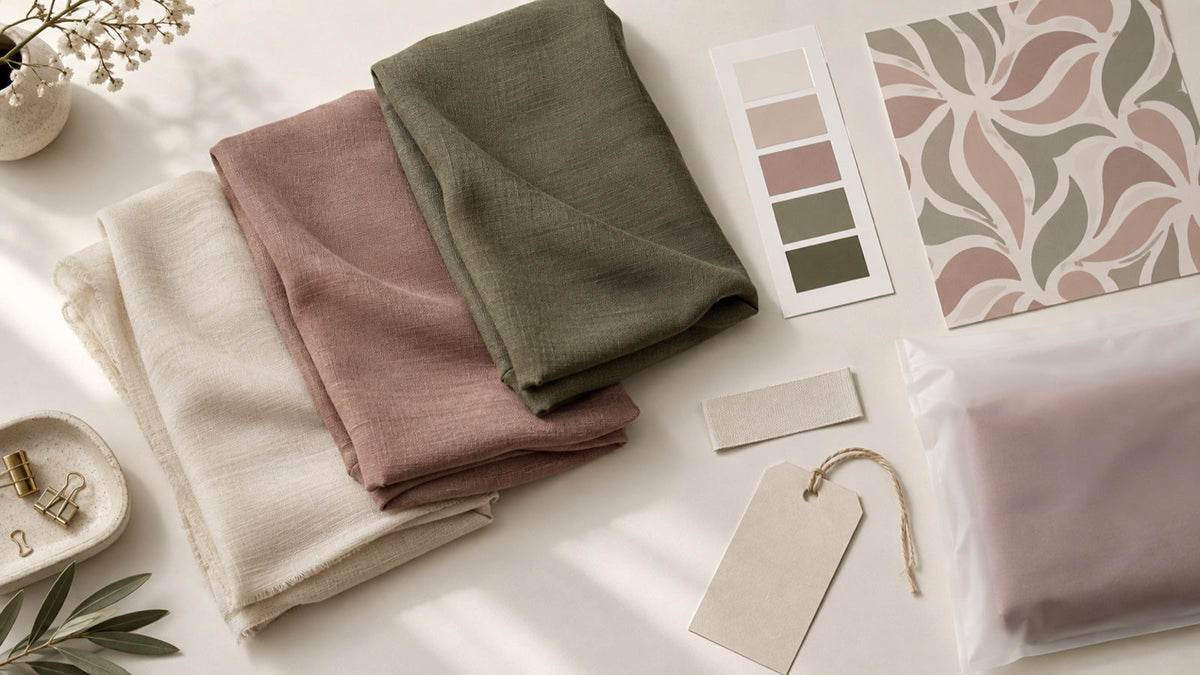
To style a printed hijab, start by repeating one color from the print in your outfit. Keep the other pieces simple, then adjust the fold so the part of the pattern you like sits near your face. Before heading out, check the coverage and the way the print looks from the front, side and back.
You do not need an exact matching set, and every color in the scarf does not need a partner. One shared color is often enough to make a floral, geometric or abstract print feel connected to your clothes.
At MinYang Manufacturer, our printed hijab collection is a starting point for exploring different designs. Use the steps below to choose a print that works with the clothes you already wear—or the outfits your customers want to build.
1. Choose one color to connect the outfit
Lay the hijab next to your top, dress or outer layer. Look for three things: the background color, the largest motif and any smaller accent colors.
For a quiet combination, repeat the background color in your clothes. A cream-based floral hijab with a cream tunic lets the flowers provide the contrast. For a more noticeable combination, repeat an accent instead: an olive leaf in the print can connect to an olive dress, even if olive occupies only a small part of the scarf.
If neither option fits your wardrobe, try a neutral you already own. Black, navy, grey, cream and brown are useful possibilities, but compare them with the actual scarf rather than assuming every neutral will work equally well.
Try this: build the outfit around one main clothing color and one accent. Treat this as a starting point, not a rule you must follow.
2. Look at pattern scale and contrast together
A small motif is not automatically subtle. Tiny black-and-white shapes can look more striking than a large flower in closely related beige tones. Consider both the size of the design and how strongly its colors contrast.
| Print detail | Outfit idea to try | What to check when wearing it |
|---|---|---|
| Small, repeated motifs | A plain shirt with wide-leg trousers | Whether the repeated shapes feel busy near the face |
| Large floral or abstract shapes | A simple dress or long tunic | Which part of the motif remains visible after folding |
| Border print | A plain outfit that repeats the border color | Whether you prefer the border near the face or along the shoulder |
| Soft, closely related colors | Tonal separates, such as cream and taupe | Whether you want more contrast in a bag or outer layer |
| High-contrast geometric print | A solid-color dress or coordinated separates | Whether the scarf remains the focal point you intended |
These are styling options, not recommendations based on face shape, age or skin tone. Your preferred contrast and coverage matter more than a fixed formula.

3. Test the print in the fold you actually wear
A flat product photo shows the whole design. A worn hijab shows only parts of it, so a beautiful flat print may produce a different effect once wrapped.
Start with your usual comfortable fold and coverage. Then try shifting the scarf a little to bring a quieter section, a border or a favorite motif toward the face. Compare both ends before deciding which one to drape across the shoulder.
Check three views in a mirror:
- Front: do you like the colors and shapes framing your face?
- Side: does the fold reveal an unexpected pale reverse or hide the border?
- Back: does the remaining fabric give you the coverage you want?
Do not assume the reverse is identical to the front. Ask for a reverse-side photo if it is not shown. Avoid pulling the fabric tighter just to align a motif; a comfortable wrap is more useful than a perfectly positioned flower.

4. Build three outfits around one print
Imagine a hijab with a cream background, navy shapes and muted rust accents. The following examples are hypothetical outfit combinations, not descriptions of a specific product.
An everyday outfit: pair it with a cream longline top and dark trousers or a maxi skirt. Let the scarf introduce the rust accent without adding another matching item.
A work or study outfit: try navy separates with a plain jacket or cardigan. Check the scarf with the outer layer on, because collars and lapels can change which part of the print is visible.
A dinner or gathering outfit: choose a rust-colored dress that picks up the smaller accent. Keep accessories simple if you want the print to remain the main detail.
The same method works across seasons. For cooler days, compare the scarf with the coat you actually wear outside. For warmer days, check your complete combination of scarf, underlayer and clothing for comfort. A print alone tells you nothing about warmth or airflow.

5. Pair prints deliberately when you want more detail
A printed hijab can work with patterned clothing. Start with a shared color, then try a difference in scale: a larger floral scarf with a fine stripe, for example.
View the whole outfit from a few steps away. If the patterns compete more than you like, switch one piece to a solid color or introduce a plain outer layer. If you enjoy a bolder combination, you do not need to simplify it just because it contains two prints.
6. Check the scarf beyond its pattern
Design is only one part of choosing a hijab. Before buying, check dimensions, fiber composition, care instructions and photos of the scarf being worn. If measurements are listed in centimeters and you shop in inches, divide by 2.54 to compare them with a scarf you already own.
You can explore printed modal hijabs and printed jersey hijabs, but assess each item's details. “Modal” refers to a fiber type; “jersey” describes a knit construction. Neither label alone establishes a finished scarf's opacity, weight or grip.
For a sample or a scarf you already own, check it in the layers you intend to wear. Look at coverage in daylight, inspect the edges and try your usual securement method. Follow its care label rather than a universal washing temperature for all printed hijabs.
For boutiques: show how the print becomes an outfit
Customers may find a printed scarf easier to choose when they can picture it with familiar clothing. Photograph one print with two or three plain outfits, keeping lighting consistent so the color remains recognizable.
Before adding a design to an assortment, review a physical sample where possible. Check the print face and reverse, edge finish, dimensions and appearance after folding. Ask whether motif placement can vary between pieces, especially when a border or large central design is important to the look.
Start with the clothing colors your own customers buy, then identify prints that connect to those colors. Confirm current availability and ordering details before planning a launch; a collection listing does not establish stock for every color or quantity.
If you want a printed hijab with your own design, prepare the artwork, preferred fabric, color references and intended placement before requesting a sample. Review the physical sample after folding because artwork scale and placement can look different on the finished hijab.
Frequently asked questions
What should I wear with a printed hijab?
Start with a solid-colored top, dress or outer layer that repeats one color in the print. You can match the background for a softer combination or an accent for more contrast. You do not need to match every color.
Can I wear a printed hijab with a patterned dress?
Yes. Try a shared color and different pattern sizes, then assess the full outfit from a distance. A plain outer layer can help if you want a quieter combination.
How do I style a floral hijab without making the outfit too busy?
Pair it with plain clothing and choose one flower, leaf or background color to repeat. Adjust the fold to place a section you like near your face. Low-contrast flowers are another option if you prefer a softer effect.
Does a printed hijab need a matching undercap?
An exact match is optional. If the undercap is visible, try a color from the print or a neutral that works with it. Choose fit and comfort first, and check the finished combination for your preferred coverage.
Will the print look exactly like the product photo when I wear it?
Not necessarily. Folding, draping, lighting and screen settings change the appearance, and motif placement may vary between pieces. Ask for worn and reverse-side photos, or review a sample when placement and color are important.
Find a print you can make your own
Choose a design with at least one color you already enjoy wearing, then try it with two outfits before adding more accessories. A useful print gives you options without requiring a completely new wardrobe.
For help narrowing down a personal purchase or a boutique selection, contact MinYang Manufacturer with your preferred print, colors and intended quantity. Ask about current product details and availability before ordering.