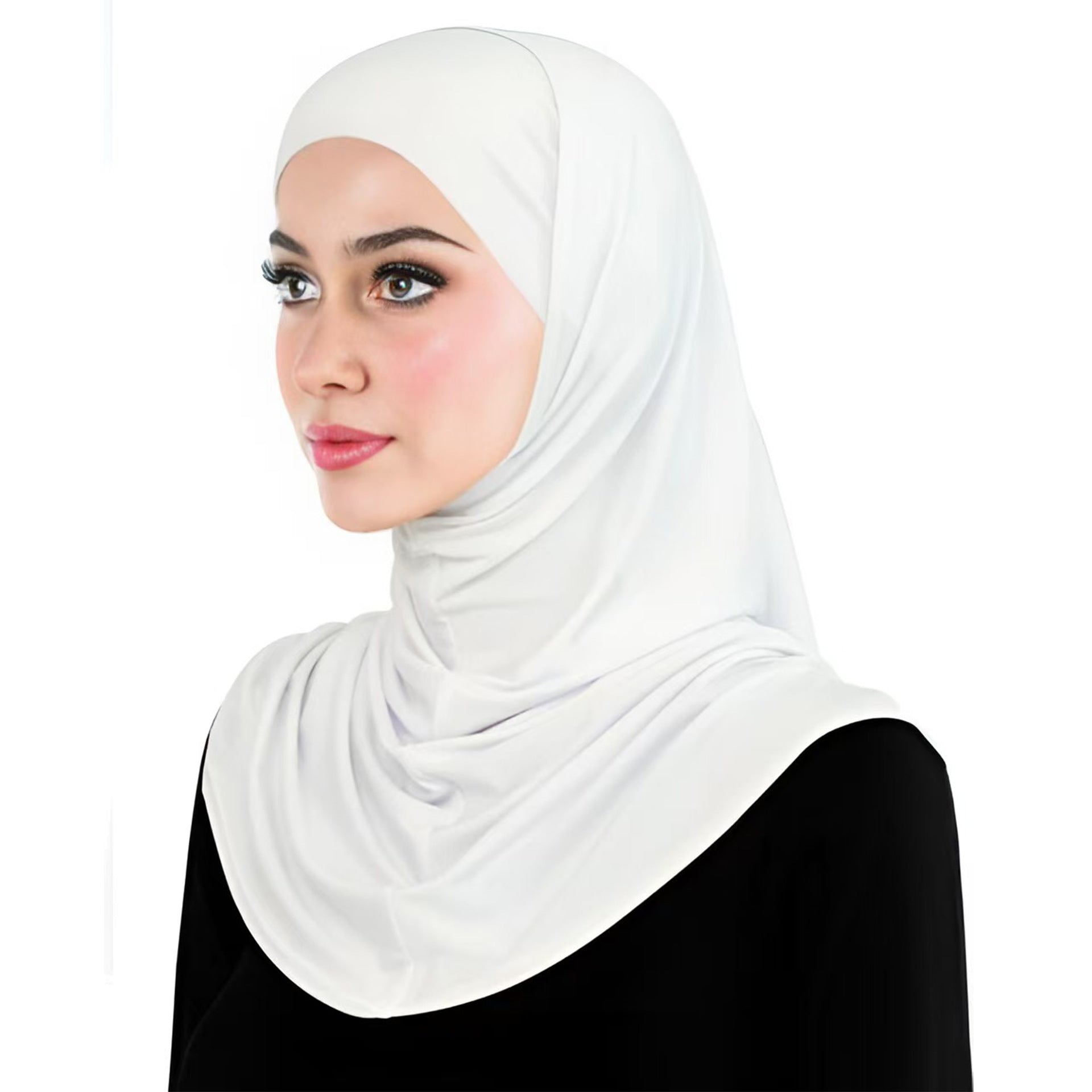
To start a hijab brand, define the customer and first product range before asking for prices. Then send suppliers a written brief, compare physical samples, confirm colors or artwork, choose labels and packaging, and approve one complete pre-production specification. MOQ, pricing and lead time should be confirmed for each product and customization combination rather than treated as one fixed number.
A small, focused first range is easier to test than a large launch with many fabrics, shapes and colors. You can learn which products customers understand, which colors they reorder and which details need improvement before committing to a broader assortment.
This guide follows the sourcing decisions a new brand needs to make. It does not replace a quotation or production agreement. Specifications, availability, minimum quantities and timing can change, so confirm them in writing for the exact product you plan to order.
1. Define the customer and the first range
Start with the person who will wear the product and the routine it needs to support. A daily-wear range for students may need different colors, care requirements and price points from an occasion collection or a boutique print launch.
Write down:
- The target customer and destination market
- The intended use, such as daily wear, work, events or active routines
- The planned selling price range
- The first product formats
- The number of colors or prints you want to test
- The sizes or dimensions you need
- Your preferred launch date and sales channel
For a first launch, choose one clear product story. That might be a core plain-hijab range, a compact printed collection or a coordinated hijab-and-undercap offer. MinYang Manufacturer's custom hijab collection shows product-development examples, but the specifications for a new project still need to be confirmed separately.
Avoid selecting products only because they look popular in another store. Your customers, climate, styling preferences and price expectations may be different. A focused brief gives the supplier something concrete to quote and sample.
2. Turn the idea into a supplier brief
A supplier cannot accurately quote “a premium hijab” without more detail. Translate the idea into measurable requirements.
| Brief item | Information to provide | Why it matters |
|---|---|---|
| Product format | Rectangular, square, instant, undercap set or another construction | Changes pattern, sewing and material use |
| Fabric direction | Fiber content if known, knit or woven construction, weight or reference sample | A fabric name alone may not define the finished feel |
| Dimensions | Finished length and width, including units | Prevents different assumptions about size |
| Edge finish | Rolled hem, stitched edge, fringe or another finish | Affects appearance and production steps |
| Color or print | Color reference, physical swatch or artwork file | Helps control what is being sampled |
| Branding | Sewn label, printed mark, hangtag or packaging logo | Each method has its own artwork and quantity requirements |
| Packaging | Individual bag, box, insert, barcode or care card | Affects cost, packing time and carton planning |
| Quantity | Units per style, color and size | MOQ may apply at more than one level |
| Destination | Country, city or postal code | Needed for a useful shipping estimate |
If you have a reference product, explain what you like about it instead of asking for an exact copy. Record its dimensions, weight, opacity, stretch, drape and edge finish. Do not assume a product name such as modal, jersey, chiffon or satin describes all of those properties.
3. Choose the fabric and construction before expanding colors
Fabric choice affects drape, stretch, opacity, care, printing and the way a hijab behaves around the face. Construction matters too. “Jersey” describes a knit structure, while “modal” refers to a fiber type; the terms are not interchangeable and neither one alone confirms the complete composition.
Ask for the stated fiber composition, fabric construction, finished dimensions and product weight. Then test the sample for:
- Hand feel and comfort during the intended wear time
- Opacity in both light and dark colors
- Stretch and recovery where relevant
- Grip and movement with the intended undercap or securement method
- Edge and seam quality
- Appearance after washing according to the proposed care instructions
Begin with a manageable color plan. Core neutrals can support repeat purchasing, while selected seasonal or statement colors can give the range a distinct point of view. The right balance depends on your customer data, so avoid treating a supplier's full color card as a requirement to order every shade.
4. Use samples to answer specific questions
A sample is useful when it has a written purpose. Before requesting one, list what you need to learn: fabric feel, dimensions, print clarity, face fit, opacity, stitching, label placement or packaging size.

An illustrative sample check: record finished measurements, edge construction and requested revisions before approval.
Use a simple sample record for every option:
- Assign the sample a code and date.
- Photograph the front, back, edge and any fastening or label.
- Measure the finished product yourself.
- Compare the stated and observed color under consistent lighting.
- Try the product in the way customers will wear it.
- Wash or care for it as instructed and record the result.
- List every requested change in one revision message.
Do not approve a sample with scattered comments across several chats. A single numbered change list reduces ambiguity. When a revision is made, ask which sample or specification the new version replaces.
5. Prepare colors and print artwork carefully
For solid colors, a screen image is rarely enough for final approval because displays and lighting vary. Use an agreed color reference or physical swatch where possible, then keep an approved sample for comparison.
For custom prints, ask which file format, color mode, resolution, repeat size and bleed the supplier needs. Confirm whether the artwork is a placement print, border print or repeating pattern. Check which part of the design will remain visible after the hijab is folded and worn.
Review a strike-off or print sample for:
- Scale and repeat alignment
- Color against the approved reference
- Fine lines and small text
- Front and reverse appearance
- Placement tolerance between pieces
- Print behavior near hems, seams or fringes

Examples from MinYang Manufacturer's Custom Hijab range showing how print artwork can be reviewed alongside a worn result.
The printed hijab collection can help you discuss formats and visual directions. It does not confirm that every displayed design, fabric or color is available for a new custom order, so send the exact product reference when asking.
Before sharing artwork, confirm that your brand owns it or has permission to use it. Keep the final production file, approved colors and revision number in the project record.
6. Plan labels and packaging as part of the product
Private label details should be considered before final production, because a label or package can affect sewing, folding and packing.
Common label questions include:
- Will the brand mark be woven, printed, embroidered, heat-applied or placed on a hangtag?
- What are the finished dimensions and placement?
- Does the label include fiber composition, care or country-of-origin information?
- Is a barcode, SKU or batch reference required?
- Which language or market-specific information is needed?
Packaging decisions may include an individual bag, branded box, insert card, size sticker or barcode label. The site's custom label options and custom packaging options show several available directions. Minimum quantities can differ by method and item, so confirm the current requirement for each component rather than applying one accessory MOQ to the entire order.

An illustrative layout of the label, hangtag, care card and packaging choices that should be confirmed before production.
Ask for a photo or physical sample showing the complete product folded and packed. Confirm that the package fits without crushing embellishments or creating excessive folds, and check any labeling rules that apply in the markets where you sell.
7. Understand MOQ as several connected quantities
MOQ means minimum order quantity, but a project may have more than one minimum. There can be a total order minimum, a minimum per fabric, color, print, size, label method or packaging item.
When comparing quotations, ask suppliers to state:
- Total quantity for the product
- Quantity per style, color and size
- Separate minimums for fabric dyeing or printing
- Separate minimums for labels, tags and packaging
- Sample, setup or artwork charges
- What happens to unused labels or packaging after production
The lowest stated product MOQ may not be the lowest practical launch quantity once colors and branded components are added. Build a quantity table that shows every component before deciding whether the first range is financially workable.
Do not negotiate only around the smallest number. A larger quantity is useful only when the specification is right and the sales plan can support it. A smaller, well-tested range can provide better information for a repeat order.
8. Approve the pre-production specification
Before production, combine the approved decisions into one specification sheet. It should identify the product code, fabric, composition, color or print reference, finished measurements and tolerances, construction, edge finish, label, packaging, quantity breakdown and approved sample.
Also record:
- Unit price and what it includes
- Sample and setup charges
- Deposit and balance terms
- Production timing and what event starts the clock
- Inspection method and acceptable tolerances
- Carton markings and packing quantities
- Shipping terms, destination and required documents
- Process for changes, shortages or defects
Ask the supplier to confirm the final document rather than relying only on earlier chat messages. If anything changes after approval, record the revision, price effect and timing effect before production continues.
9. Plan inspection, shipping and launch together
Decide how finished goods will be checked before they leave the supplier. The inspection plan may include quantity, color, dimensions, sewing, print placement, labels, packaging and carton condition. The checks should follow the approved specification.
Request a shipping quotation using the packed carton count, carton dimensions, gross weight and destination. Clarify the quoted transport method and which charges are included. Customs, duties, taxes, documentation and delivery responsibility can vary by route and destination, so confirm them for the actual shipment.
Allow time after delivery for counting, quality checks, photography, product-page preparation and customer-service training. A production completion date is not the same as a customer launch date.
A concise inquiry checklist
Send the following information when requesting a quotation or sample:
- Brand name and destination market
- Product format and reference link or photo
- Fabric and construction requirements
- Finished dimensions and edge details
- Colors, prints or artwork status
- Quantity per style, color and size
- Label, hangtag and packaging requirements
- Target launch date
- Shipping destination and preferred method, if known
- Questions the sample must answer
A complete brief makes it easier to compare suppliers on the same basis. It also creates the first version of the specification you will use through sampling and production.
Frequently asked questions
How much money do I need to start a hijab brand?
There is no universal amount. Build a budget from samples, product quantities, custom materials, labels, packaging, inspection, shipping, duties or taxes, photography, website costs and a contingency. Request current quotations for the exact range rather than estimating from one unit price.
What is the MOQ for private label hijabs?
MOQ varies by product, fabric, color, print, label method and packaging. Ask for the total minimum and the minimum per style, color and size. Confirm branded accessories separately because they may have different requirements.
Should I start with plain or printed hijabs?
Choose the format that supports your customer and brand idea. Plain ranges can focus on fabric, fit and color depth. Printed ranges add artwork, color matching, repeat and placement checks. A small sample test can show which is easier for your first launch.
What should I check in a hijab sample?
Check composition, construction, measurements, weight, opacity, stretch where relevant, drape, stitching, edge finish, color or print, label placement and care results. Test the sample in the intended use and record all requested changes in writing.
Do I need custom packaging for the first order?
Not always. Packaging must protect the product and provide any required information. A new brand can compare a simple packaging option with a fully customized one, then assess cost, MOQ, storage and customer experience before deciding.
Prepare your first product brief
Your first sourcing conversation will be more productive when it begins with a clear product, quantity and testing plan. Start with the customer, narrow the range and use samples to turn preferences into measurable specifications.
To discuss a custom hijab project, contact MinYang Manufacturer with your product format, fabric direction, quantity by color, branding needs and destination. Current availability, MOQ, pricing and timing must be confirmed for the final specification.